
There’s a moment when a properly grilled steak comes off the fire. The crust is dark and crisp, the interior is a perfect rosy pink, and the whole thing rests under a blanket of fresh green sauce. That’s what this foolproof grilled chimichurri steak delivers, every time. No guesswork. No dry edges. Just a method that works.

The trick is not just the chimichurri. It’s the two-zone fire and a specific rest. Most recipes tell you to make chimichurri and throw the steak on the grill. That’s fine, but it’s not foolproof. Foolproof means controlling heat, timing, and the sauce’s emulsion. Let’s break it down.
The Chimichurri: A Ratio Adjustment
Standard chimichurri uses equal parts vinegar and oil, or sometimes more oil. I adjust the ratio slightly: one part vinegar to three parts oil. Why? Because the vinegar’s acidity can overwhelm the herbs if you use too much, especially when the steak is already salted. The extra oil helps the sauce cling to the meat and creates a better emulsion. You want a sauce that coats, not one that runs off.
Chop the parsley and oregano fine, but not to a paste. You want texture. Let the garlic and shallot sit in the vinegar for five minutes before adding the oil. This softens their bite without making them raw. Whisk the oil in slowly. If it looks separated, that’s fine — it will come together as it sits. Set it aside at room temperature. Do not refrigerate it before serving. Cold oil will seize on the hot steak.
Choosing and Preparing the Steak
Flank or skirt steak are ideal. They’re lean, cook quickly, and have a pronounced grain that makes slicing against it satisfying. Pat the steak dry. Salt it generously — about a teaspoon per pound — and let it sit at room temperature for 20 minutes. This isn’t a marinade. It’s a dry brine that draws moisture to the surface, which then evaporates to form a better crust.
Do not oil the steak. Oil the grill grates instead. A dry surface sears better. If you oil the steak, it can steam before it browns.
Two-Zone Grilling: The Key to Control
Set up your grill with a hot side and a cooler side. For charcoal, bank the coals to one side. For gas, turn half the burners to high and leave the rest off. Target 450–500°F on the hot side. This is hot enough to sear, not so hot that the outside burns before the inside cooks.
Sear the steak on the hot side, 3–4 minutes per side. Do not move it. Let the crust form. Then move it to the cooler side, close the lid, and let it cook indirectly until the internal temperature hits 125°F for medium-rare. This takes about 4–6 minutes for a 1-inch steak. Use an instant-read thermometer. The carryover cooking during the rest will bring it to 130–135°F.
Common mistake: skipping the indirect step. If you cook the whole thing over direct heat, the outside will be overdone before the center is warm. The two-zone method gives you a perfect gradient from crust to pink center.
The Rest: Non-Negotiable
Rest the steak for 8 minutes. Spoon two tablespoons of chimichurri over the top right when it comes off the grill. The heat warms the sauce, and the oil helps keep the crust from drying out. If you slice immediately, the juices will run onto the cutting board instead of staying in the meat. That’s the difference between a juicy steak and a dry one.
Slice against the grain into half-inch strips. The grain on flank steak runs lengthwise — slice perpendicular to it. Each bite should be tender, not chewy. Drizzle the remaining chimichurri over the slices just before serving.
Why This Works Every Time
The two-zone fire gives you control. The adjusted chimichurri ratio balances acidity and oil for better cling. The rest with sauce on top adds flavor without drying the crust. No special equipment, no advanced technique. Just a sequence that’s easy to follow and hard to mess up.
If you’re cooking for guests, this is the one. It looks impressive, tastes fresh, and the method is bulletproof. Try it once, and you’ll never go back to guessing.
Note: Caffeine content in this recipe is zero, but if you’re serving with a coffee pairing, remember that caffeine affects people differently. Individual sensitivity varies. For specific health or dietary concerns, consult a qualified professional.
Frequently Asked Questions
What cut of steak works best for chimichurri?
Flank or skirt steak are traditional. They’re thin, cook fast, and the grain is easy to slice against. Sirloin flap or hanger steak also work well. Avoid thick cuts like ribeye unless you reverse sear.
Can I make chimichurri ahead of time?
Yes, but add the oil just before serving for the brightest color. If storing, keep the herbs and vinegar separate from the oil, then combine and whisk when ready. The vinegar will dull the herbs overnight.
Why rest the steak with chimichurri on top?
The residual heat gently warms the sauce, and the oil helps carry flavor into the meat’s surface. It also keeps the crust from drying out during the rest.
What if I don’t have a grill?
Use a cast-iron skillet over high heat. Sear 3–4 minutes per side, then finish in a 400°F oven until 125°F internal. Rest as directed.
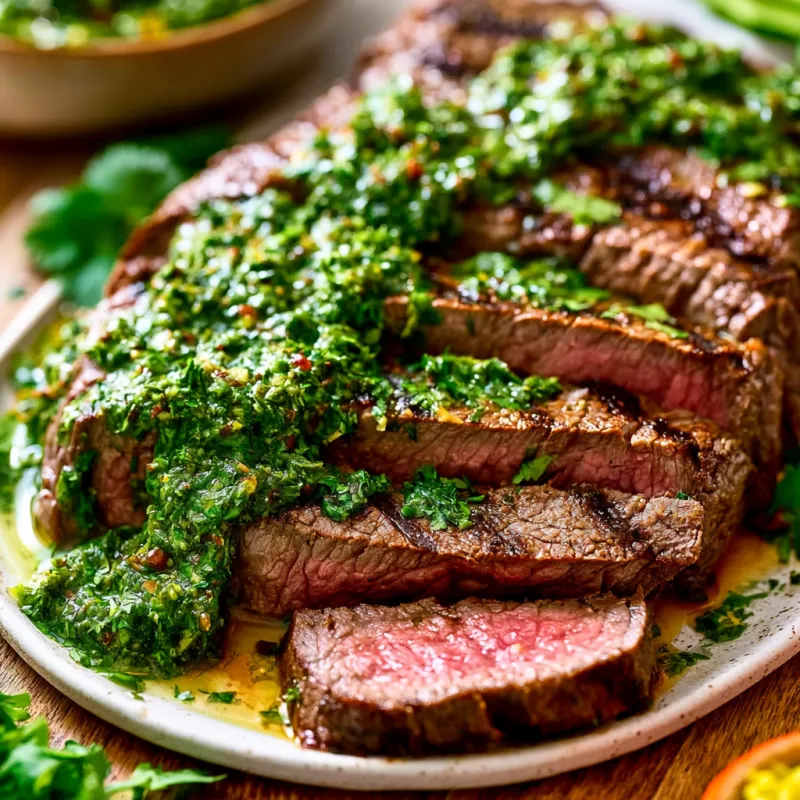
Foolproof Grilled Chimichurri Steak
Ingredients
Equipment
Method
- Make the chimichurri: In a bowl, combine parsley, oregano, garlic, shallot, red pepper flakes, 1 tsp salt, and ½ tsp pepper. Add vinegar and stir. Let sit 5 minutes, then whisk in olive oil in a slow stream. Set aside at room temperature.
- Prepare the steak: Pat the steak dry with paper towels. Season generously with salt and pepper on all sides. Let sit at room temperature for 20 minutes.
- Set up the grill for two-zone cooking: For charcoal, bank hot coals to one side. For gas, turn half the burners to high, leave the other half off. Target 450–500°F on the hot side.
- Sear the steak over high heat: Place steak on the hot side. Cook 3–4 minutes per side for a good crust. Do not move it during each side.
- Move to indirect heat: Transfer steak to the cooler side. Close the lid. Cook until internal temperature reaches 125°F for medium-rare (about 4–6 minutes, depending on thickness). Use an instant-read thermometer inserted into the thickest part.
- Rest the steak: Remove from grill. Place on a cutting board. Spoon 2 tablespoons of chimichurri over the top. Let rest 8 minutes. Do not skip this — resting reabsorbs juices.
- Slice and serve: Slice against the grain into ½-inch strips. Drizzle with remaining chimichurri. Serve immediately.