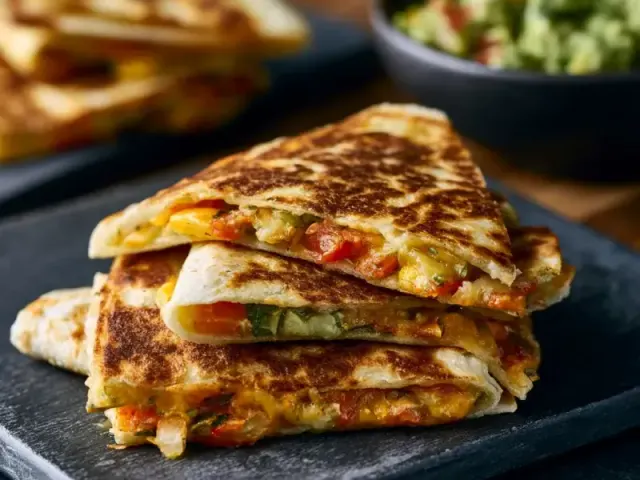
The Best Summer Veggie Quesadillas
The first time I made a summer veggie quesadilla, I ended up with a sad, limp tortilla and a puddle of vegetable juice on the plate. The filling slid out in a wet heap. That was the day I learned the golden rule: vegetables need to be treated right before they ever touch a tortilla.

Why the Right Technique Matters
A great quesadilla is a study in contrasts. The exterior needs to be shatteringly crisp. The interior must be hot, melty, and cohesive. Summer vegetables are full of water, which is their enemy when it comes to quesadillas. The trick isn't to avoid them — it's to cook them first.
The Vegetable Prep That Changes Everything
Dice everything into uniform 1/2-inch pieces. This isn't just for looks. Even pieces cook at the same rate, which means every bite has the same texture. Zucchini, bell pepper, and corn are my go-to summer trio. The zucchini brings tenderness, the bell pepper adds sweetness, and corn gives little pops of juice that don't make things soggy because they're concentrated inside the kernel.
Here's the specific technique I use: heat one teaspoon of olive oil in a large non-stick skillet over medium-high heat. The oil should shimmer but not smoke. Add the vegetables and spread them into a single layer. Do not stir for three full minutes. This allows them to develop a light char, which adds flavor and drives off surface moisture. Then stir and cook for two more minutes. You're looking for vegetables that are tender but still have some bite. Overcooking turns them into mush.
Transfer the vegetables to a bowl and let them cool for two minutes. This step is critical — hot vegetables will steam the tortilla from the inside, creating a soft, sad texture.
The Cheese Ratio That Holds Everything Together
I use one cup of shredded Monterey Jack for two burrito-sized tortillas. That's half a cup per quesadilla. Monterey Jack melts beautifully and has a mild flavor that lets the vegetables shine. Spread the cheese over the entire tortilla first — this creates a cheese layer on both sides of the filling, acting as a moisture barrier. Then pile the vegetables on just one half. Fold the empty half over, pressing gently.
The Dry-Skillet Method for Maximum Crisp
Here's the move that separates a good quesadilla from a great one: cook it in a dry skillet. No oil. No butter. Place the assembled quesadilla in a non-stick pan over medium heat. The tortilla will toast directly on the hot surface. After 2-3 minutes, the bottom should be deep golden brown and feel firm when you tap it with a spatula. Flip carefully and cook the other side for another 2-3 minutes.
The result is a tortilla that's crisp all the way through, not just on the surface. The cheese melts completely, binding the vegetables into a cohesive filling that doesn't spill out when you pick up a wedge.
A Common Mistake to Avoid
Don't press down on the quesadilla with your spatula while it cooks. I know it's tempting. But pressing squeezes out the melted cheese and makes the filling uneven. Let the heat do the work.
Resting Makes It Better
After cooking, transfer the quesadilla to a cutting board and let it rest for one minute. This allows the cheese to set just enough that the filling stays put when you cut into it. Slice into wedges with a sharp knife — a dull one will drag the filling out.
Takeaway
The best summer veggie quesadilla comes down to three things: pre-cooked vegetables with their moisture driven off, a cheese layer on both sides of the tortilla, and a dry-skillets finish for that perfect crunch. It's simple, but each step has a purpose. Once you've made it this way, you'll never go back to the soggy version.
Frequently Asked Questions
Why are my quesadillas soggy?
Sogginess usually comes from excess moisture in the vegetables. The key is to sauté the vegetables first to evaporate their water content, and to avoid overloading the tortilla. Also, resist the urge to add oil to the skillet when cooking the assembled quesadilla — a dry pan creates the crispest crust.
Can I use other vegetables?
Absolutely. Summer squash, mushrooms, or finely chopped broccoli all work well. Just keep the total volume similar (about 1.5 cups total) and make sure to cook off any watery vegetables like mushrooms until they release their liquid and it evaporates.
What cheese melts best for quesadillas?
Monterey Jack is ideal because it melts smoothly and has a mild flavor that doesn't overpower the vegetables. A blend of Monterey Jack and sharp cheddar also works. Avoid pre-shredded cheese as it contains anti-caking agents that prevent smooth melting.
The Best Summer Veggie Quesadillas

Crispy, golden-brown quesadillas packed with perfectly cooked summer vegetables and just the right amount of melted cheese. A technique-driven recipe that guarantees no sogginess.
- Large non-stick skillet
- spatula
- cutting board
- chef's knife
- medium bowl
- paper towels
- 2 large flour tortillas (burrito size, 10-inch)
- 1 medium zucchini (diced into 1/2-inch cubes)
- 1 red bell pepper (diced into 1/2-inch pieces)
- 1/2 cup corn kernels (fresh from 1 ear, or frozen, thawed and patted dry)
- 1/4 cup finely diced red onion
- 1 teaspoon olive oil
- 1/4 teaspoon kosher salt
- 1/8 teaspoon black pepper
- 1 cup shredded Monterey Jack cheese
- 1/4 cup chopped fresh cilantro
- Optional: 1/2 teaspoon ground cumin
- For serving: sour cream (salsa, or sliced avocado)
- Prep the vegetables: Dice the zucchini and bell pepper into uniform 1/2-inch cubes. Finely dice the red onion. If using fresh corn, cut kernels off the cob. If using frozen, make sure kernels are fully thawed and blotted dry with a paper towel.
- Sauté the vegetables: Heat 1 teaspoon olive oil in a large non-stick skillet over medium-high heat. Once the oil shimmers, add the zucchini, bell pepper, corn, and red onion. Spread into an even layer. Cook without stirring for 3 minutes to get a light char. Then stir and cook for another 2 minutes, until vegetables are tender but not mushy. Sprinkle with salt, pepper, and optional cumin. Transfer to a bowl and let cool for 2 minutes.
- Assemble the quesadilla: Wipe the skillet clean. Place one tortilla on a cutting board. Sprinkle half the cheese evenly over the entire tortilla. Spread half the vegetable mixture over one half of the tortilla. Sprinkle with half the cilantro. Fold the empty half over the filling. Repeat for the second quesadilla.
- Cook the quesadilla: Return the skillet to medium heat. Place one quesadilla in the dry skillet (no oil). Cook for 2-3 minutes, until the bottom is golden brown and crispy. Carefully flip with a spatula. Cook another 2-3 minutes, until the second side is golden and the cheese is fully melted. The tortilla should feel firm and sound crisp when tapped.
- Rest and slice: Transfer the quesadilla to a cutting board and let it rest for 1 minute. This allows the cheese to set slightly so the filling doesn't fall out when cut. Slice into wedges. Repeat with the second quesadilla. Serve immediately.
For the crispiest result, do not oil the skillet for the final cook. The residual moisture from the tortilla and the heat will create the perfect golden crust. If you prefer a softer tortilla, you can brush the outside with a little oil. Leftover quesadillas can be stored in the fridge for up to 2 days. Reheat in a dry skillet over medium heat to restore crispness, not in the microwave.
Recipe: The Best Summer Veggie Quesadillas
Equipment
- Large non-stick skillet
- spatula
- cutting board
- chef's knife
- medium bowl
- paper towels
Ingredients
- 2 large flour tortillas (burrito size, 10-inch)
- 1 medium zucchini (diced into 1/2-inch cubes)
- 1 red bell pepper (diced into 1/2-inch pieces)
- 1/2 cup corn kernels (fresh from 1 ear, or frozen, thawed and patted dry)
- 1/4 cup finely diced red onion
- 1 teaspoon olive oil
- 1/4 teaspoon kosher salt
- 1/8 teaspoon black pepper
- 1 cup shredded Monterey Jack cheese
- 1/4 cup chopped fresh cilantro
- Optional: 1/2 teaspoon ground cumin
- For serving: sour cream (salsa, or sliced avocado)
Instructions
- Prep the vegetables: Dice the zucchini and bell pepper into uniform 1/2-inch cubes. Finely dice the red onion. If using fresh corn, cut kernels off the cob. If using frozen, make sure kernels are fully thawed and blotted dry with a paper towel.
- Sauté the vegetables: Heat 1 teaspoon olive oil in a large non-stick skillet over medium-high heat. Once the oil shimmers, add the zucchini, bell pepper, corn, and red onion. Spread into an even layer. Cook without stirring for 3 minutes to get a light char. Then stir and cook for another 2 minutes, until vegetables are tender but not mushy. Sprinkle with salt, pepper, and optional cumin. Transfer to a bowl and let cool for 2 minutes.
- Assemble the quesadilla: Wipe the skillet clean. Place one tortilla on a cutting board. Sprinkle half the cheese evenly over the entire tortilla. Spread half the vegetable mixture over one half of the tortilla. Sprinkle with half the cilantro. Fold the empty half over the filling. Repeat for the second quesadilla.
- Cook the quesadilla: Return the skillet to medium heat. Place one quesadilla in the dry skillet (no oil). Cook for 2-3 minutes, until the bottom is golden brown and crispy. Carefully flip with a spatula. Cook another 2-3 minutes, until the second side is golden and the cheese is fully melted. The tortilla should feel firm and sound crisp when tapped.
- Rest and slice: Transfer the quesadilla to a cutting board and let it rest for 1 minute. This allows the cheese to set slightly so the filling doesn't fall out when cut. Slice into wedges. Repeat with the second quesadilla. Serve immediately.