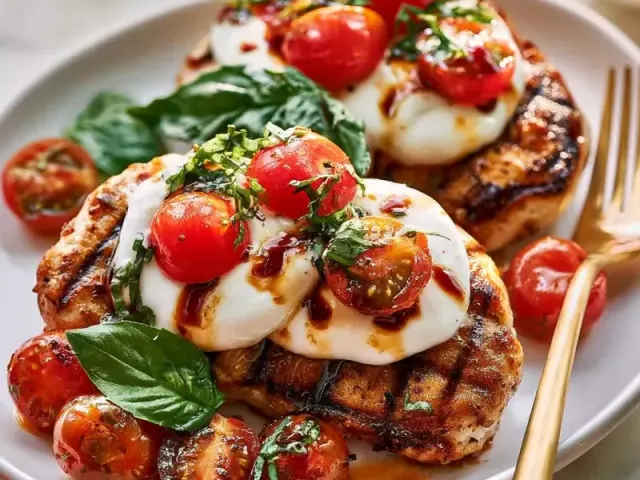
Simple Summer Caprese Chicken Recipe
The smell of ripe tomatoes and basil is summer on a plate. This Caprese chicken takes that classic salad—tomato, mozzarella, basil—and turns it into a hot dinner that still feels light and fresh. No heavy sauces, no complicated steps. Just juicy chicken, melted cheese, and a tangy-sweet balsamic glaze that comes together in one pan.

Here’s what I love most: the chicken stays tender because we bake it first, then add the toppings. That little technique makes all the difference. No dry, overcooked meat. Just a golden crust and a soft, melty finish.
Why This Method Works
Most recipes pile everything on raw chicken and hope for the best. The problem? By the time the chicken is cooked through, the tomatoes are mushy and the cheese has turned into a rubbery skin. I take a different route.
I bake the seasoned chicken for 15 minutes at 400°F. That gives the meat a head start. The surface browns slightly, locking in juices. Then I add the tomato slices and mozzarella and bake for just 5-7 minutes more. The cheese melts without separating, and the tomatoes warm through but keep their shape.
The internal temperature is your best friend here. Chicken breasts are safe at 165°F, but I pull them at 160°F because they’ll keep cooking as they rest. That extra 5 degrees of carryover heat means the meat stays moist, not stringy.
The Balsamic Glaze: A Real Shortcut
You can buy balsamic glaze at the store, but making it takes exactly 5 minutes and tastes brighter. I simmer 1/4 cup balsamic vinegar with 1 tablespoon honey over medium-low heat. Stir often. Watch for the bubbles to get bigger and slower—that’s the signal it’s thickening. When it coats the back of a spoon, it’s done. Remove it from the heat immediately, or it’ll turn into sticky candy.
If you skip the honey, the glaze will be too sharp. A little sweetness balances the acidity of the tomatoes and the richness of the cheese. That’s the ratio I keep: 4 parts vinegar to 1 part sweetener.
Choosing Your Tomatoes and Cheese
Summer tomatoes are the star. Look for ones that feel heavy for their size and give slightly to gentle pressure. If they smell like a garden, you’ve got winners. Slice them into even 1/4-inch rounds so they cook at the same rate as the cheese.
Fresh mozzarella comes in two forms: the soft balls packed in water (bocconcini or ciliegine) and the firmer, drier blocks. For this recipe, use the block-style mozzarella. It slices neatly and melts without turning into a puddle. Pat it dry with a paper towel before slicing to avoid excess moisture in the baking dish.
Lay the tomato and cheese slices slightly overlapping on each chicken breast. Don’t pile them high—one layer is enough. Too much weight on top can steam the chicken instead of letting it brown.
Common Mistakes and How to Avoid Them
- Overcooking the chicken: Use a digital thermometer. Insert it into the thickest part of the breast, not touching the bone or the pan. Pull at 160°F.
- Watery tomatoes: If your tomatoes are very juicy, salt the slices lightly and let them sit on paper towels for 5 minutes before adding to the chicken. That draws out excess liquid.
- Burnt glaze: Keep the heat low when reducing the balsamic. Medium-low is perfect. If you see smoke, pull it off immediately and start over with a fresh batch.
Serving Ideas
This dish pairs beautifully with a simple side salad of arugula and lemon vinaigrette. Or serve it over zucchini noodles or a crusty baguette to soak up the juices. For a low-carb option, skip the bread and add extra greens.
Leftovers keep well for up to three days in the fridge. Reheat gently in a 350°F oven for about 10 minutes, or eat cold sliced over a salad. The flavors actually deepen overnight.
Takeaway: Simple summer Caprese chicken is proof that a few quality ingredients and the right technique can make a quick weeknight dinner feel special. Bake the chicken first, add the toppings later, and always make your own balsamic glaze. That’s the method that works, every time.
Frequently Asked Questions
Can I use chicken thighs instead of breasts?
Yes, boneless skinless chicken thighs work well. Bake at 400°F for 18-20 minutes total, then add toppings and bake 5 more minutes. Ensure internal temperature reaches 170°F for dark meat.
How do I keep the chicken from drying out?
Don't overcook. Use a meat thermometer and pull the chicken at exactly 160°F. It will carry over to 165°F while resting. Also, patting the chicken dry before seasoning helps the oil and spices stick, sealing in moisture.
Can I use dried basil instead of fresh?
Fresh basil is key here—it adds a bright, peppery note that dried basil can't match. If you must substitute, use 2 teaspoons dried basil sprinkled over the cheese before baking, but the texture will be different.
What can I substitute for balsamic glaze?
A simple drizzle of extra-virgin olive oil and a squeeze of lemon juice works in a pinch. Or use a store-bought balsamic reduction, but check the label for added sugar.
How do I make this dairy-free?
Replace the fresh mozzarella with a dairy-free mozzarella-style shred or slice. The bake time remains the same. Note that the melt and flavor will differ slightly.
Simple Summer Caprese Chicken

Juicy baked chicken topped with ripe tomatoes, fresh mozzarella, and basil, finished with a balsamic glaze. Ready in under 30 minutes.
- Baking dish
- meat thermometer
- sharp knife
- cutting board
- small saucepan
- 4 boneless (skinless chicken breasts (about 6 oz each))
- 2 tablespoons olive oil
- 1 teaspoon kosher salt
- 1/2 teaspoon black pepper
- 1 teaspoon dried oregano
- 2 large ripe tomatoes (sliced into 1/4-inch rounds)
- 8 oz fresh mozzarella (sliced into 1/4-inch rounds)
- 1/2 cup fresh basil leaves
- 1/4 cup balsamic vinegar
- 1 tablespoon honey or brown sugar
- Preheat oven to 400°F (200°C). Pat chicken breasts dry with paper towels. Brush with olive oil and season evenly with salt, pepper, and oregano.
- Place chicken in a single layer in a baking dish. Bake for 15 minutes.
- Meanwhile, make the balsamic glaze: in a small saucepan, combine balsamic vinegar and honey. Simmer over medium-low heat, stirring often, until reduced by half and syrupy (about 5-7 minutes). Remove from heat.
- Remove chicken from oven. Top each breast with tomato slices, then mozzarella slices. Return to oven and bake for 5-7 minutes more, until cheese is melted and chicken reaches an internal temperature of 165°F (74°C) at the thickest part.
- Let rest for 5 minutes. Top with fresh basil leaves and drizzle with balsamic glaze. Serve immediately.
Store leftovers in an airtight container in the fridge for up to 3 days. Reheat gently in a 350°F oven to keep the chicken moist. For a gluten-free meal, ensure your balsamic vinegar is certified gluten-free.
Recipe: Simple Summer Caprese Chicken
Equipment
- Baking dish
- meat thermometer
- sharp knife
- cutting board
- small saucepan
Ingredients
- 4 boneless (skinless chicken breasts (about 6 oz each))
- 2 tablespoons olive oil
- 1 teaspoon kosher salt
- 1/2 teaspoon black pepper
- 1 teaspoon dried oregano
- 2 large ripe tomatoes (sliced into 1/4-inch rounds)
- 8 oz fresh mozzarella (sliced into 1/4-inch rounds)
- 1/2 cup fresh basil leaves
- 1/4 cup balsamic vinegar
- 1 tablespoon honey or brown sugar
Instructions
- Preheat oven to 400°F (200°C). Pat chicken breasts dry with paper towels. Brush with olive oil and season evenly with salt, pepper, and oregano.
- Place chicken in a single layer in a baking dish. Bake for 15 minutes.
- Meanwhile, make the balsamic glaze: in a small saucepan, combine balsamic vinegar and honey. Simmer over medium-low heat, stirring often, until reduced by half and syrupy (about 5-7 minutes). Remove from heat.
- Remove chicken from oven. Top each breast with tomato slices, then mozzarella slices. Return to oven and bake for 5-7 minutes more, until cheese is melted and chicken reaches an internal temperature of 165°F (74°C) at the thickest part.
- Let rest for 5 minutes. Top with fresh basil leaves and drizzle with balsamic glaze. Serve immediately.