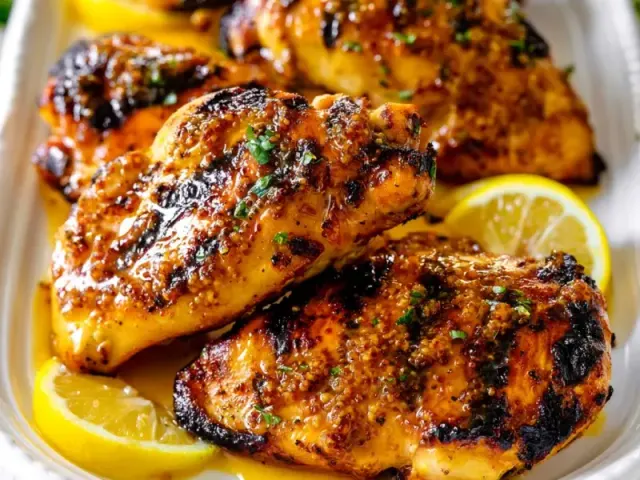
Family-Favorite Grilled Honey Mustard Chicken
The smell of honey mustard caramelizing on a hot grill is one of those signals that dinner is about to be special. The sweetness catches first, then the tang of mustard cuts through, and by the time the chicken hits the plate, the edges are sticky and darkened in all the right ways.

This recipe focuses on the balance between the two mustards — Dijon for smooth heat, whole-grain for little bursts of texture — and the honey, which does more than sweeten. It helps the chicken develop a deep, amber crust that stays tender inside. The key is not to rush the marinade time, and to keep a close eye on the heat during the last few minutes.
Why This Method Works
Most honey mustard chicken recipes treat the sauce as a simple mix-and-grill affair. The problem is that honey burns easily, and mustard can turn bitter if cooked too long. I separate the sauce into two parts: a marinade that flavors the meat from the inside, and a reserved glaze applied only at the end. This gives you the caramelized coating without the acrid, scorched taste.
The acid from apple cider vinegar also plays a role. It tenderizes the chicken slightly and keeps the sweetness from feeling cloying. Smoked paprika adds a subtle warmth that doesn't compete with the mustard but rounds it out.
Choosing Your Chicken
Boneless, skinless thighs are the most forgiving cut for grilling. Their higher fat content means they stay moist even if you're a minute or two past the target temperature. Breasts work too, but they need a gentler hand. Pound them to an even thickness — about 1/2 inch — so the center cooks at the same rate as the edges. If you prefer skin-on pieces, increase the cook time by a few minutes and watch for flare-ups from the rendered fat.
Marinade Timing
Thirty minutes is the minimum. The acid and salt need that long to penetrate the surface. Four hours is better, but don't go overnight — the vinegar can start to break down the meat texture, making it mushy. If you're short on time, score the chicken lightly with a knife to help the marinade seep in faster.
Always discard the used marinade that touched raw chicken. Never reuse it for basting or serving. That's why you set aside those three tablespoons at the start.
Grill Setup and Technique
Preheat your grill to medium-high, about 400°F (200°C). Clean the grates thoroughly, then oil them with a paper towel dipped in neutral oil held by tongs. This prevents sticking and helps those grill marks form cleanly.
Place the chicken on the hottest part of the grates. Leave it alone for 5-6 minutes. You want a good sear before you flip. If the chicken sticks, it's not ready to turn. Let it cook a little longer and it will release naturally.
After flipping, cook another 4 minutes, then start checking temperature. Insert the instant-read thermometer into the thickest part of the thigh or breast. Pull the chicken at 165°F (74°C) — carryover cooking will bring it slightly higher.
The Glazing Window
During the last 2 minutes, brush the reserved honey mustard glaze onto both sides. Work quickly and keep the lid open or slightly ajar. The sugar in the honey will bubble and darken fast. If you see black spots forming, move the chicken to a cooler part of the grill or reduce the burner heat.
This is where the magic happens. The glaze sets into a tacky, glossy layer that tastes of concentrated honey and sharp mustard, with a faint smokiness from the paprika and grill.
Resting and Serving
Rest the chicken under a loose foil tent for 5 minutes. This lets the juices redistribute so every bite is moist. Slice against the grain if using breasts, or serve thighs whole.
The glaze will be sticky and wonderful. Pair the chicken with something fresh — a crisp green salad, grilled asparagus, or a simple slaw. The sweetness of the honey mustard also works well with roasted potatoes or a grain salad.
A Note on Grilling Safety
Handling raw chicken requires care. Wash your hands and any surfaces that touched the raw meat with hot, soapy water. Use separate utensils for raw and cooked chicken. Keep the reserved glaze away from raw meat contact. And always use oven mitts or grill gloves when adjusting the grate or handling hot equipment.
Takeaway
Grilled honey mustard chicken doesn't have to be a gamble between burnt and bland. With a little planning — separate the glaze, watch the heat, and use a thermometer — you get juicy meat with a caramelized finish that tastes like summer. That balance of sweet and sharp, charred and tender, is what makes this a family favorite.
Frequently Asked Questions
Can I use chicken breasts instead of thighs?
Yes. Boneless skinless breasts work well. Pound them to an even thickness (about 1/2 inch) for even cooking. Adjust grill time to 6-8 minutes per side, and always check internal temperature at 165°F.
Can I make the honey mustard sauce ahead?
Absolutely. Whisk the sauce up to 2 days in advance and refrigerate in an airtight container. Bring to room temperature before using as a marinade.
How do I prevent the honey mustard glaze from burning on the grill?
The sugar in honey can burn quickly. Apply the reserved glaze only during the last 2 minutes of grilling, and keep the heat at medium-high (not high). Watch closely and flip if needed.
Grilled Honey Mustard Chicken

Juicy grilled chicken thighs or breasts glazed with a sweet-tangy honey mustard sauce that caramelizes beautifully on the grill.
- grill (gas or charcoal)
- instant-read thermometer
- small bowl
- whisk
- tongs
- basting brush
- 1/3 cup honey
- 1/4 cup Dijon mustard
- 2 tablespoons whole-grain mustard
- 2 tablespoons apple cider vinegar
- 1 tablespoon olive oil
- 2 cloves garlic (minced)
- 1/2 teaspoon smoked paprika
- 1/4 teaspoon salt
- 1/4 teaspoon black pepper
- 4 boneless (skinless chicken thighs (or breasts, about 6 oz each))
- In a small bowl, whisk together honey, Dijon mustard, whole-grain mustard, apple cider vinegar, olive oil, garlic, smoked paprika, salt, and pepper until smooth. Set aside 3 tablespoons for basting later.
- Place chicken in a shallow dish or zip-top bag. Pour remaining marinade over chicken, turning to coat. Cover and refrigerate at least 30 minutes or up to 4 hours.
- Preheat grill to medium-high heat (about 400°F / 200°C). Clean and oil the grates.
- Remove chicken from marinade, letting excess drip off. Discard used marinade.
- Grill chicken thighs 5-6 minutes per side, or until internal temperature reaches 165°F (74°C) on an instant-read thermometer. For breasts, adjust time to 6-8 minutes per side.
- During the last 2 minutes of grilling, brush reserved marinade onto both sides of the chicken. Watch closely to prevent burning.
- Transfer chicken to a plate, tent loosely with foil, and rest 5 minutes before serving.
For extra juiciness, use chicken thighs. If using breasts, pound to even thickness. Store leftovers in an airtight container in the refrigerator for up to 3 days. Reheat gently in a skillet or oven at 350°F.
Recipe: Grilled Honey Mustard Chicken
Equipment
- grill (gas or charcoal)
- instant-read thermometer
- small bowl
- whisk
- tongs
- basting brush
Ingredients
- 1/3 cup honey
- 1/4 cup Dijon mustard
- 2 tablespoons whole-grain mustard
- 2 tablespoons apple cider vinegar
- 1 tablespoon olive oil
- 2 cloves garlic (minced)
- 1/2 teaspoon smoked paprika
- 1/4 teaspoon salt
- 1/4 teaspoon black pepper
- 4 boneless (skinless chicken thighs (or breasts, about 6 oz each))
Instructions
- In a small bowl, whisk together honey, Dijon mustard, whole-grain mustard, apple cider vinegar, olive oil, garlic, smoked paprika, salt, and pepper until smooth. Set aside 3 tablespoons for basting later.
- Place chicken in a shallow dish or zip-top bag. Pour remaining marinade over chicken, turning to coat. Cover and refrigerate at least 30 minutes or up to 4 hours.
- Preheat grill to medium-high heat (about 400°F / 200°C). Clean and oil the grates.
- Remove chicken from marinade, letting excess drip off. Discard used marinade.
- Grill chicken thighs 5-6 minutes per side, or until internal temperature reaches 165°F (74°C) on an instant-read thermometer. For breasts, adjust time to 6-8 minutes per side.
- During the last 2 minutes of grilling, brush reserved marinade onto both sides of the chicken. Watch closely to prevent burning.
- Transfer chicken to a plate, tent loosely with foil, and rest 5 minutes before serving.