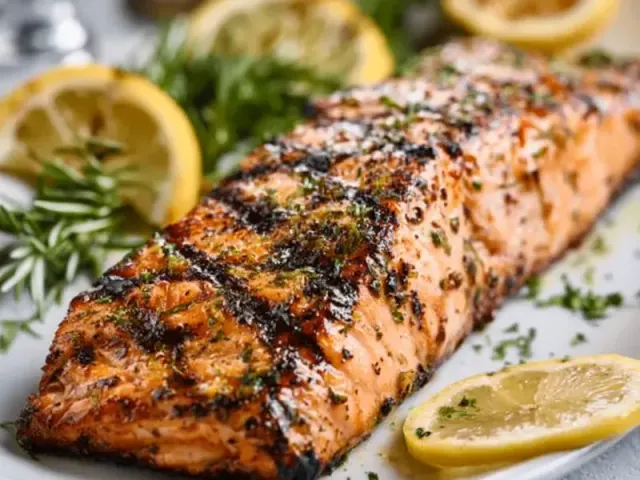
Easy Grilled Lemon Herb Salmon: Perfectly Flaky Every Time
The smell of lemon and fresh herbs hitting hot grill grates is the kind of promise that makes a meal feel like an occasion. But I've ruined my share of salmon — dry, chalky, stuck to the grates. That's why I developed this method. It's not about a secret ingredient. It's about a strict ratio and a timing trick that gives you consistently flaky, moist fish with that beautiful char.

Why This Ratio Matters
The marinade is where most people go wrong. Too much acid and the fish turns mushy. Too little and the flavor is flat. I keep the ratio at 1 part lemon juice to 1 part olive oil — exactly 1/4 cup each for four fillets. The oil carries the herb flavor and protects the fish from drying out. The lemon adds brightness without overpowering. And here's the crucial detail: never marinate longer than 15 minutes. Set a timer. The acid in the lemon cooks the proteins just like heat does. Beyond 15 minutes, you're essentially starting to ceviche the outside of the salmon, and it will fall apart on the grill.
The Grilling Technique: Indirect Heat, Direct Results
Most people blast salmon directly over high heat and wonder why it's dry. Here's the method I use: preheat your grill to medium-high (about 400°F). Clean the grates thoroughly — a wire brush and a quick oil with a paper towel held in tongs is non-negotiable. Then, set up for two-zone grilling: turn one side of the burners to high, the other side to low. Place the salmon skin-side down on the hot side for exactly 2 minutes to get those beautiful grill marks. Then, slide the fillets to the cooler side, close the lid, and let them cook without flipping for 6 minutes. This indirect heat gently cooks the fish through without burning the outside. The skin acts as a natural barrier, protecting the delicate flesh.
The Flip and The Baste
After 6 minutes, use a thin metal spatula to gently flip the salmon. Don't try to lift it with tongs — you'll break the fillet. The skin should release easily if the grates were clean and oiled. If it sticks, give it another 30 seconds. Once flipped, brush the reserved marinade (the 2 tablespoons you set aside earlier) onto the cooked side. Close the lid and cook for another 4-6 minutes. This is where the instant-read thermometer earns its keep. Insert it into the thickest part of the fillet. You're aiming for 125°F for medium (my preference — it stays silky and moist) or 130°F for well-done. Remember, the fish will carry-over cook another 5°F while resting.
Visual Cues: What to Look For
Numbers are great, but your eyes matter too. The salmon is ready when the flesh turns from translucent to opaque all the way through. The thickest part should still have a slight rosy center if you're going for medium. The edges will look flaky and the surface will feel firm but springy when pressed gently. If you see white albumin — those white curds on the surface — you've cooked it a touch too long. Still edible, but next time pull it off a minute earlier.
The Common Mistake to Avoid
Don't move the fish around once it's on the hot side. Let it sit for the full 2 minutes. Moving it too early tears the skin and makes it stick. Also, resist the temptation to press down on the fillets with a spatula. That squeezes out the moisture and leaves you with dry fish. Let the grill do the work.
Serving and Storing
Let the salmon rest for 2 minutes off the grill before serving. This allows the juices to redistribute. Serve with lemon wedges and a sprinkle of fresh dill or parsley. Leftovers? Store in an airtight container in the fridge for up to 2 days. Reheat gently in a 300°F oven for 5-7 minutes — never the microwave, which turns it to rubber. Flake it cold into salads or grain bowls for an easy lunch.
Takeaway
Grilled salmon doesn't have to be a gamble. Stick to the 15-minute marinade limit, use indirect heat for most of the cooking, and trust your thermometer. You'll get consistently flaky, bright, herb-kissed fish that tastes like summer on a plate.
Frequently Asked Questions
How long should I marinate salmon before grilling?
No more than 15 minutes. Because the marinade contains lemon juice (acid), longer marinating will begin to break down the proteins and make the fish mushy or 'cooked' on the outside before it hits the grill.
What temperature should grilled salmon be?
For moist, flaky salmon, cook to an internal temperature of 125°F for medium, or 130°F for well-done. The temperature will rise about 5°F during resting. Use an instant-read thermometer for accuracy.
Should I grill salmon with the skin on or off?
Skin on is best for grilling. The skin acts as a protective barrier against the high heat, preventing the delicate flesh from drying out or sticking. It also makes flipping easier. You can remove it after cooking if you prefer.
How do I keep salmon from sticking to the grill?
Clean your grill grates thoroughly with a wire brush, then oil them well before preheating. Use a paper towel dipped in vegetable oil and held with tongs to rub the grates. Also, make sure the salmon skin is dry before placing it on the grill.
Easy Grilled Lemon Herb Salmon

A simple, foolproof technique for grilling salmon with a bright lemon herb marinade. The key is a specific marinade ratio and indirect heat for perfectly flaky, moist fish.
- grill
- mixing bowl
- whisk
- tongs
- instant-read thermometer
- basting brush
- 4 6-ounce salmon fillets, skin on
- 1/4 cup fresh lemon juice (about 2 lemons)
- 1/4 cup olive oil
- 3 cloves garlic (minced)
- 2 tablespoons fresh dill (chopped)
- 1 tablespoon fresh parsley (chopped)
- 1 teaspoon salt
- 1/2 teaspoon black pepper
- In a small bowl, whisk together lemon juice, olive oil, garlic, dill, parsley, salt, and pepper. Set aside 2 tablespoons of the marinade for basting.
- Place salmon fillets in a shallow dish. Pour remaining marinade over them, turning to coat. Cover and refrigerate for 15 minutes (no longer, or the acid will start to 'cook' the fish).
- Preheat your grill to medium-high heat (about 400°F). Clean and oil the grates well.
- Remove salmon from marinade, letting excess drip off. Place fillets skin-side down on the grill. Close the lid. Cook for 6 minutes without moving.
- Using a thin spatula, carefully flip the salmon. Brush with the reserved marinade. Close the lid and cook for another 4-6 minutes, until an instant-read thermometer inserted into the thickest part reads 125°F for medium (or 130°F for well-done).
- Remove from grill. Let rest for 2 minutes. The internal temperature will rise about 5°F during resting.
- Serve immediately, with lemon wedges and extra fresh herbs if desired.
For best results, use skin-on fillets of similar thickness (about 1 inch). The skin helps protect the delicate flesh from direct heat. If using skinless fillets, reduce cook time by 1-2 minutes per side. Leftover grilled salmon keeps in the fridge for up to 2 days. Reheat gently in a low oven (300°F) for 5-7 minutes. Avoid microwaving, which can dry it out.
Recipe: Easy Grilled Lemon Herb Salmon
Equipment
- grill
- mixing bowl
- whisk
- tongs
- instant-read thermometer
- basting brush
Ingredients
- 4 6-ounce salmon fillets, skin on
- 1/4 cup fresh lemon juice (about 2 lemons)
- 1/4 cup olive oil
- 3 cloves garlic (minced)
- 2 tablespoons fresh dill (chopped)
- 1 tablespoon fresh parsley (chopped)
- 1 teaspoon salt
- 1/2 teaspoon black pepper
Instructions
- In a small bowl, whisk together lemon juice, olive oil, garlic, dill, parsley, salt, and pepper. Set aside 2 tablespoons of the marinade for basting.
- Place salmon fillets in a shallow dish. Pour remaining marinade over them, turning to coat. Cover and refrigerate for 15 minutes (no longer, or the acid will start to 'cook' the fish).
- Preheat your grill to medium-high heat (about 400°F). Clean and oil the grates well.
- Remove salmon from marinade, letting excess drip off. Place fillets skin-side down on the grill. Close the lid. Cook for 6 minutes without moving.
- Using a thin spatula, carefully flip the salmon. Brush with the reserved marinade. Close the lid and cook for another 4-6 minutes, until an instant-read thermometer inserted into the thickest part reads 125°F for medium (or 130°F for well-done).
- Remove from grill. Let rest for 2 minutes. The internal temperature will rise about 5°F during resting.
- Serve immediately, with lemon wedges and extra fresh herbs if desired.