Crowd-Pleasing Grilled Balsamic Chicken That Actually Stays Juicy
The smell of balsamic vinegar hitting hot grill grates is unmistakable. It's sharp, sweet, and a little bit smoky — the promise of dinner done right. But I've had my share of dry, rubbery chicken that tasted more like regret than balsamic. So I worked out a method that delivers every time. Here's the exact technique.

The Ratio That Matters
Most recipes use equal parts oil and vinegar. That's a mistake. Balsamic vinegar is aggressive — it's acidic and it caramelizes fast. Too much, and your chicken will taste sour and burn before it's cooked through. I keep the ratio at 3 parts olive oil to 1 part balsamic vinegar. This gives you enough acid to tenderize and flavor without overwhelming. The oil also helps conduct heat evenly on the grill, creating those beautiful char marks without scorching.
Building the Marinade
Start with good balsamic vinegar — nothing aged for decades, just a reliable supermarket bottle with moderate sweetness. Whisk in the oil slowly until emulsified. Then add a clove of minced garlic, a spoonful of Dijon mustard (it helps the marinade cling to the meat), a touch of honey for balance, and dried oregano. Salt and pepper go in now, not later. Taste the marinade. It should be tangy first, then sweet, with a gentle warmth from the garlic. If it makes you pucker hard, add a drizzle more oil.
Why Not More Acid?
A common mistake is thinking more vinegar equals more flavor. In reality, too much acid breaks down the chicken's proteins into a mushy, mealy texture. The chicken will also steam rather than sear, because the excess moisture creates a barrier on the grill. Stick to the 3:1 ratio. It's your safety net.
Preparation: The Hidden Step
Before you even think about the marinade, take a look at your chicken breasts. If they're thick at one end and thin at the other, pound them to an even 3/4-inch thickness. This single step prevents the dreaded situation where one end is cooked through and the other is still raw. Place the chicken between two sheets of plastic wrap and use a rolling pin or heavy skillet. Go gently — you want even thickness, not a flattened pancake.
Marinate for 1 to 4 hours in the refrigerator. Less than an hour and the flavor stays on the surface. More than four hours and the acid starts to overwork the meat. Set a timer. I'm serious.
The Grill Setup
Preheat your grill to medium-high, 400-450°F. Clean the grates thoroughly with a wire brush, then oil them. I fold a paper towel, dip it in vegetable oil, and use long tongs to wipe the grates. This prevents sticking without adding flare-ups from olive oil's low smoke point.
Take the chicken out of the fridge 20 minutes before grilling. Letting it sit at room temperature means the center will cook at the same rate as the edges. Cold meat on a hot grill always cooks unevenly.
Grilling: The Two-Flip Rule
Remove the chicken from the marinade and let the excess drip off. Do not pat it dry. The oil on the surface helps create a crust and prevents the meat from bonding to the grates.
Place the chicken on the hottest part of the grill. Do not move it for 5-6 minutes. You want a deep sear. You'll see the edges turn opaque and small bubbles form on the top. When the chicken releases easily from the grates, it's ready to flip. If it sticks, leave it — it's not done searing.
Flip once and cook for another 4-5 minutes. Use an instant-read thermometer inserted into the thickest part. Pull the chicken off at 160°F. Carryover cooking will raise it to a safe 165°F while it rests. If you wait until it hits 165°F on the grill, you'll have dry chicken.
The Resting Step
This is where most people ruin good chicken. Transfer the breasts to a cutting board and tent loosely with foil for 5 minutes. Do not skip this. The juices are bubbling hot and need time to redistribute through the meat. Slice immediately and they'll pool on the board, leaving you with dry slices. Wait five minutes and every bite will be moist.
Serving and Pairing
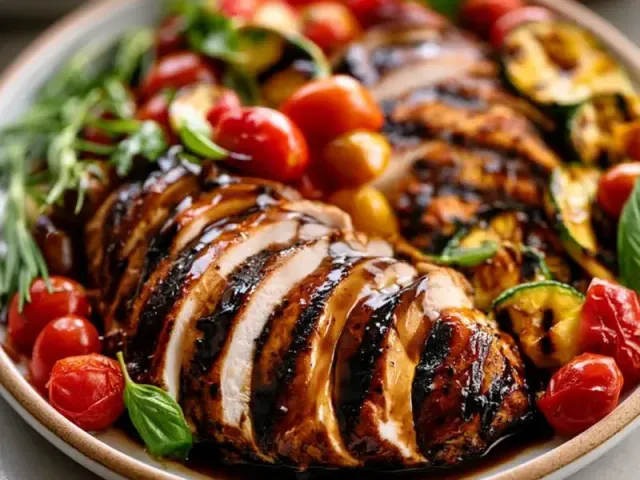
Slice against the grain for the most tender bite. Garnish with fresh basil or parsley if you have it — the green against the dark balsamic glaze is as good for the eyes as it is for the palate. This chicken works with almost any side: a crisp green salad, roasted vegetables, or a simple pasta with olive oil and Parmesan.
One last note: if you want a thicker glaze to drizzle over the finished chicken, simmer the leftover marinade in a small saucepan for 3-4 minutes until it reduces and thickens. Never use the raw marinade on cooked meat. The heat from simmering makes it safe and concentrates the flavor beautifully.
Takeaway
Great grilled balsamic chicken isn't complicated. It's about the right ratio of oil to vinegar, even thickness, and pulling the meat off the grill at exactly 160°F. Do those three things and you'll have chicken that's juicy, flavorful, and worthy of a second helping.
Frequently Asked Questions
Can I use chicken thighs instead of breasts?
Absolutely. Boneless skinless thighs work beautifully. They are more forgiving and stay juicy even if you overcook slightly. Grill for 6-7 minutes per side, until internal temperature reaches 175°F for best texture.
Why is my balsamic chicken always dry?
The most common mistake is overcooking. Use an instant-read thermometer and pull the chicken off at 160°F. Also, avoid marinating longer than 4 hours — the acid can start to break down the proteins, leading to a mealy, dry texture. Finally, always let the meat rest for 5 minutes before slicing.
Can I make this marinade ahead of time?
Yes. Whisk the marinade together and store it in an airtight container in the refrigerator for up to 3 days. Give it a good whisk or shake before using, as the oil and vinegar will separate.
What if I don't have a grill?
You can cook this chicken in a cast-iron skillet or grill pan over medium-high heat. Follow the same timing and temperature guidelines. The char marks will be less defined, but the flavor will still be excellent.
Is this recipe gluten-free?
Yes, all ingredients listed are naturally gluten-free. Just double-check your Dijon mustard and balsamic vinegar labels to ensure no hidden gluten, as some brands may add it.
Crowd-Pleasing Grilled Balsamic Chicken

Juicy grilled chicken breasts marinated in a balanced balsamic mixture, grilled to perfection with a caramelized exterior. The key is a 3:1 oil-to-vinegar ratio and a resting step that locks in moisture.
- mixing bowl
- whisk
- measuring spoons
- gallon zip-top bag or glass dish
- grill (gas or charcoal)
- instant-read thermometer
- tongs
- cutting board
- chef's knife
- 4 boneless (skinless chicken breasts (about 6 oz each))
- 1/4 cup balsamic vinegar
- 3/4 cup extra-virgin olive oil
- 3 cloves garlic (minced)
- 1 tablespoon Dijon mustard
- 1 tablespoon honey
- 1 teaspoon dried oregano
- 1/2 teaspoon salt
- 1/4 teaspoon black pepper
- Fresh basil or parsley for garnish (optional)
- Pat chicken breasts dry with paper towels. If breasts are thicker than 1 inch, place between two sheets of plastic wrap and gently pound to an even 3/4-inch thickness. This ensures even cooking.
- In a medium bowl, whisk together balsamic vinegar, olive oil, garlic, Dijon, honey, oregano, salt, and pepper until emulsified. Taste the marinade — it should be tangy with a hint of sweetness, not harsh.
- Place chicken in a zip-top bag or glass dish. Pour marinade over chicken, seal, and massage to coat. Refrigerate for at least 1 hour, up to 4 hours. Do not exceed 4 hours — the acid will begin to break down the meat's texture, making it mushy.
- Remove chicken from refrigerator 20 minutes before grilling. This takes the chill off and promotes even cooking.
- Preheat your grill to medium-high heat, about 400-450°F. Clean and oil the grates well to prevent sticking.
- Remove chicken from marinade, letting excess drip off. Do not pat dry — the clinging oil helps prevent sticking and promotes browning.
- Place chicken on the grill. Cook for 5-6 minutes on the first side without moving. You'll see the edges begin to turn opaque and small bubbles appear on the top surface. Flip once using tongs.
- Cook for another 4-5 minutes. The internal temperature should reach 160°F when inserted into the thickest part of the breast. Carryover cooking will bring it to 165°F as it rests.
- Transfer chicken to a cutting board and let rest, loosely tented with foil, for 5 minutes. This step is non-negotiable — it redistributes juices so they don't run out when you slice.
- Slice against the grain, garnish with fresh herbs if desired, and serve.
For best results, never marinate longer than 4 hours. If you want a thicker glaze, simmer the leftover marinade in a small saucepan for 3-4 minutes until slightly thickened — do not use it raw on cooked chicken. Leftovers keep refrigerated for up to 3 days. Reheat gently in a covered skillet with a splash of water to avoid drying out.
Recipe: Crowd-Pleasing Grilled Balsamic Chicken
Equipment
- Mixing bowl
- whisk
- measuring spoons
- gallon zip-top bag or glass dish
- grill (gas or charcoal)
- instant-read thermometer
- tongs
- cutting board
- chef's knife
Ingredients
- 4 boneless (skinless chicken breasts (about 6 oz each))
- 1/4 cup balsamic vinegar
- 3/4 cup extra-virgin olive oil
- 3 cloves garlic (minced)
- 1 tablespoon Dijon mustard
- 1 tablespoon honey
- 1 teaspoon dried oregano
- 1/2 teaspoon salt
- 1/4 teaspoon black pepper
- Fresh basil or parsley for garnish (optional)
Instructions
- Pat chicken breasts dry with paper towels. If breasts are thicker than 1 inch, place between two sheets of plastic wrap and gently pound to an even 3/4-inch thickness. This ensures even cooking.
- In a medium bowl, whisk together balsamic vinegar, olive oil, garlic, Dijon, honey, oregano, salt, and pepper until emulsified. Taste the marinade — it should be tangy with a hint of sweetness, not harsh.
- Place chicken in a zip-top bag or glass dish. Pour marinade over chicken, seal, and massage to coat. Refrigerate for at least 1 hour, up to 4 hours. Do not exceed 4 hours — the acid will begin to break down the meat's texture, making it mushy.
- Remove chicken from refrigerator 20 minutes before grilling. This takes the chill off and promotes even cooking.
- Preheat your grill to medium-high heat, about 400-450°F. Clean and oil the grates well to prevent sticking.
- Remove chicken from marinade, letting excess drip off. Do not pat dry — the clinging oil helps prevent sticking and promotes browning.
- Place chicken on the grill. Cook for 5-6 minutes on the first side without moving. You'll see the edges begin to turn opaque and small bubbles appear on the top surface. Flip once using tongs.
- Cook for another 4-5 minutes. The internal temperature should reach 160°F when inserted into the thickest part of the breast. Carryover cooking will bring it to 165°F as it rests.
- Transfer chicken to a cutting board and let rest, loosely tented with foil, for 5 minutes. This step is non-negotiable — it redistributes juices so they don't run out when you slice.
- Slice against the grain, garnish with fresh herbs if desired, and serve.