
The smell of pesto hitting a hot skillet—that sharp, herbal punch of basil and garlic—is one of summer’s best shortcuts to a great meal. This one-pan summer pesto chicken sandwich is built on a simple technique: a quick, even sear on the chicken, a smear of pesto on a toasted bun, and fresh toppings that add crunch and acidity. No marinating overnight, no complicated sauces. Just one skillet and about 20 minutes.

Why One Pan Matters
Using a single skillet does more than save on dishes. The fond—those browned bits left after searing the chicken—adds a subtle savory depth to the toasted buns. When you toast the bread in the same pan, you’re picking up those flavors without any extra effort. The key is to not wash the pan between steps. Let the residual oil and browned bits do their work.
The Chicken: Even Thickness for Even Cooking
Chicken breasts are rarely uniform in thickness. The thin end cooks faster than the thick end, leaving you with dry edges and an undercooked center. Pounding solves this. Place each breast between two sheets of plastic wrap and gently pound to a consistent 1/2-inch thickness. Use a meat mallet or even a rolling pin—just be steady and even. The goal is a piece that looks like a flat, even oval.
Season with salt and pepper, then let the chicken rest at room temperature for 10 minutes. This allows the salt to penetrate slightly and the meat to relax, so it sears more evenly. A cold breast hitting a hot pan will seize up and release liquid, steaming instead of browning.
The Sear: Getting That Golden Crust
Heat your skillet over medium-high heat for a full 2 minutes. Add the olive oil—it should shimmer and flow like water, not smoke. Lay the chicken in the pan in a single layer. If you crowd the pan, the temperature drops and the chicken steams. Cook in batches if needed.
Let the chicken sear undisturbed for 4-5 minutes. You’ll see the edges turn opaque and a golden crust form. The chicken will release from the pan naturally when it’s ready. If it sticks, it needs another minute. Flip and cook for 3-4 minutes more. Use an instant-read thermometer: pull the chicken at 160°F (71°C). Carryover heat will bring it to the safe 165°F while it rests. Tent with foil for 3-5 minutes before slicing or assembling.
Toasting the Bun in the Same Pan
After removing the chicken, reduce the heat to low. Place the split buns cut-side down in the skillet. They’ll soak up the residual oil and those flavorful browned bits. Toast for about 1 minute, until golden and crisp. Watch closely—they can go from golden to burnt quickly. The toasted surface provides a barrier against the pesto and juices, keeping the bun from getting soggy.
Assembling the Sandwich
Spread about 1 tablespoon of pesto on the cut side of each bun bottom. Place the chicken breast on top. If using cheese, lay a slice on the hot chicken so it begins to melt. Add a slice of ripe tomato—season it with a tiny pinch of salt to bring out its sweetness. Pile on fresh arugula or baby spinach for a peppery bite. A drizzle of balsamic glaze adds a sweet-tart finish that cuts through the richness. Cap with the bun top and serve immediately.
Pesto Tip: Store-Bought vs. Homemade
Both work. If using store-bought, look for one with basil listed as the first ingredient and no added sugar. Homemade is simple: blend 2 cups fresh basil, 1/3 cup pine nuts or walnuts, 1/2 cup grated Parmesan, 2 cloves garlic, and 1/2 cup olive oil. The key is to pulse, not blend continuously—you want a coarse paste, not a puree. The texture should be spreadable but still have tiny bits of basil and nuts for visual and textural contrast.
Common Mistake to Avoid
Don’t skip the resting step. If you slice or assemble the chicken immediately after cooking, all the juices run out onto the cutting board, leaving the meat dry. Resting allows the proteins to relax and reabsorb the moisture. Five minutes makes a noticeable difference.
Takeaway
This one-pan summer pesto chicken sandwich is about efficiency without compromise. A properly pounded and seared chicken breast, a smear of good pesto, and fresh summer produce—all brought together in a single skillet. It’s a meal that tastes like you spent more time than you did. And that’s the kind of summer cooking I can get behind.
Frequently Asked Questions
Can I use chicken thighs instead of breasts?
Yes. Boneless, skinless chicken thighs work well. They have more fat, so they stay juicy. Pound them to 1/2-inch thickness and cook until they reach 175°F internally—about 5-6 minutes per side. The extra fat means they’re more forgiving if slightly overcooked.
How do I keep the chicken from drying out?
Two things: first, pound the chicken to an even thickness so it cooks uniformly. Second, use an instant-read thermometer and pull the chicken at 160°F—carryover heat will finish it to 165°F. Let it rest for 3-5 minutes before slicing or assembling. This allows juices to redistribute.
What if I don’t have pesto?
You can substitute with a mix of 1/4 cup mayonnaise, 2 tablespoons chopped fresh basil, 1 clove minced garlic, and 1 tablespoon grated Parmesan. Stir together and spread on the bun. It won’t be as bright, but it will still be flavorful.
Can I make this dairy-free?
Yes. Use a dairy-free pesto (check labels—many store-bought versions are vegan). Omit the cheese or use a dairy-free slice. The sandwich will still be delicious without the cheese, or you can add avocado slices for creaminess.
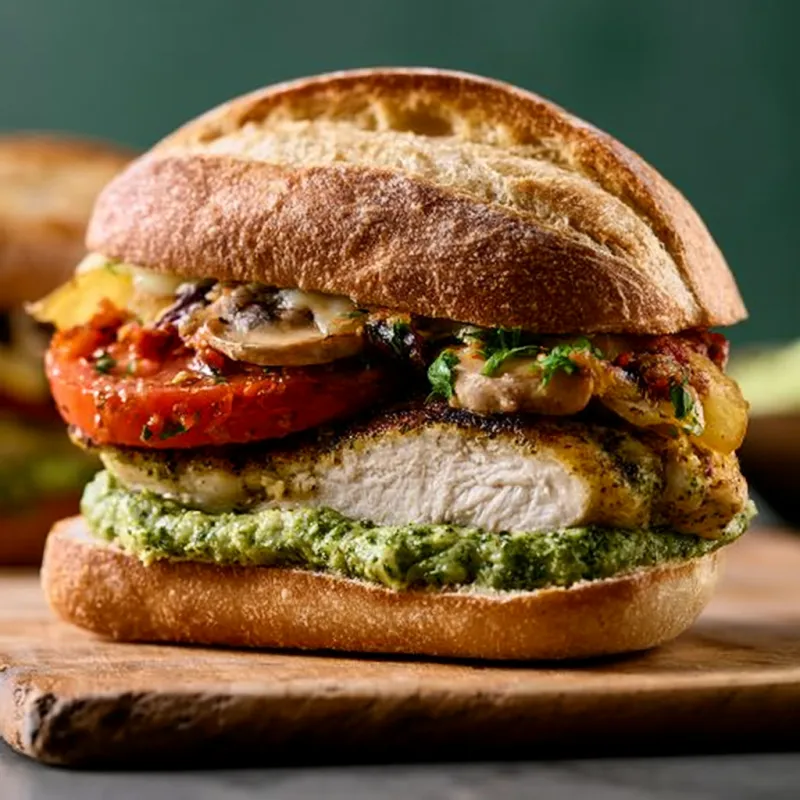
One-Pan Summer Pesto Chicken Sandwiches
Ingredients
Equipment
Method
- Place each chicken breast between two sheets of plastic wrap. Using a meat mallet or rolling pin, gently pound to an even 1/2-inch thickness. This ensures quick, even cooking.
- Season both sides of the chicken with salt and pepper. Let rest at room temperature for 10 minutes—this helps the seasoning adhere and the meat cook more evenly.
- Heat a large skillet over medium-high heat for 2 minutes. Add the olive oil and swirl to coat. The oil should shimmer but not smoke.
- Carefully place the chicken in the skillet in a single layer. Do not crowd—cook in batches if needed. Let sear undisturbed for 4-5 minutes until a deep golden crust forms. The chicken should release easily from the pan; if it sticks, it needs another minute.
- Flip the chicken using tongs. Cook for another 3-4 minutes, until the internal temperature reaches 160°F (71°C). Remove chicken to a plate and tent loosely with foil. The carryover heat will bring it to 165°F.
- Reduce the heat to low. Place the split buns cut-side down in the same skillet for about 1 minute, until lightly toasted and golden. Remove and set aside.
- Spread about 1 tablespoon of pesto on the cut side of each bun bottom. Place a chicken breast on each. Top with cheese (if using), tomato slices, and a handful of arugula. Drizzle with balsamic glaze if desired. Cap with the bun top and serve immediately.