
There’s nothing quite like the aroma of summer sausage sizzling in a hot skillet. The edges turn crisp, the fat renders, and the whole kitchen smells like a backyard cookout. But this isn’t a grill recipe — it’s a pasta dish that manages to be both comforting and light, exactly right for those warm evenings when you want something satisfying without feeling weighed down.

I’ve tested this method dozens of times. The key is the sauce: it should cling to the pasta, not pool in the bowl. That’s where the ratio matters. I keep the cream-to-pasta-water ratio at 3:2 — three parts heavy cream to two parts starchy pasta water. That gives you a sauce that’s rich but not heavy, with just enough body to coat every piece of pasta and summer sausage.
The Right Summer Sausage Matters
Not all summer sausages are created equal. Look for one that’s firm, with a good balance of fat and lean. Avoid the pre-sliced packages; a whole sausage gives you control over the cut. I cube mine into 1/2-inch pieces. Too small and they disappear into the sauce. Too large and they overwhelm the pasta. The brown develops best when the cubes have a little surface area — that’s where the flavor lives.
One common mistake: adding the sausage too early and letting it dry out. I add it after the onions have softened but before the zucchini goes in. That gives it just enough time to brown without turning tough. Watch for the edges to turn a deep mahogany. That’s your cue.
The Technique: Building the Sauce in the Pan
This is a one-pan sauce, which means every step matters. After the sausage browns, I add the zucchini and cherry tomatoes. The tomatoes need to soften — about two minutes — but not burst completely. You want them to release their juices into the pan, creating a natural base for the cream.
Here’s the specific move that makes this dish work: deglaze with the reserved pasta water before adding the cream. Pour in 1/3 cup of that starchy water and scrape up every browned bit from the bottom. That’s pure flavor. Then add the cream. The starch from the water helps the cream emulsify, so the sauce stays smooth and doesn’t separate.
Temperature control is critical. Keep the heat at medium-low once the cream goes in. A rolling boil will break the sauce. You want a gentle simmer — tiny bubbles around the edges, not a full bubble in the center. That’s when you stir in the Parmesan. I grate it myself from a block; pre-shredded cheese contains anti-caking agents that can make the sauce grainy.
The Pasta: Cook It Short, Finish It in the Sauce
I cook the pasta two minutes shy of the package’s al dente time. That’s a deliberate choice. The pasta finishes cooking in the sauce, absorbing some of that creamy liquid. The result is pasta that tastes seasoned all the way through, not just on the outside.
When you add the pasta to the sauce, toss it vigorously for about 30 seconds. This is where the starch from the pasta and the sauce combine. You’ll see the sauce thicken slightly as you toss. If it looks too thick, add more pasta water, one tablespoon at a time. The final sauce should coat the back of a spoon — not runny, not pasty.
Finishing Touches
Fresh basil is not optional here. It adds a brightness that cuts through the richness. I chiffonade it — stack the leaves, roll them tight, and slice into thin ribbons. Stir it in just before serving so it stays green and fragrant.
Serve this pasta in warm bowls. A cold bowl will cool the sauce too quickly, and the cream will start to thicken. Warm the bowls by running them under hot water for a few seconds, then drying them. It’s a small step, but it makes a difference.
A Note on Feeding a Crowd
This recipe scales easily. For a larger group, use a 12-ounce pasta and double the sauce ingredients. The key ratio — 3 parts cream to 2 parts pasta water — stays the same. If you’re serving a crowd that includes people who are sensitive to dairy, you can substitute the heavy cream with full-fat coconut milk. The flavor will shift, but the technique holds.
For anyone with specific dietary needs or concerns about caffeine or other ingredients, it’s always wise to consult a qualified professional. This dish is meant to be enjoyed as part of a balanced meal.
Takeaway
The secret to crowd-pleasing summer sausage pasta isn’t a secret at all. It’s a careful ratio of cream to pasta water, a deliberate cooking order, and the patience to let the sauce come together gently. Follow the method, and you’ll get a dish that’s creamy without being heavy, savory without being salty, and exactly right for a warm evening shared with people you like.
Frequently Asked Questions
Can I use a different type of sausage?
Yes, any fully cooked sausage works well. Smoked kielbasa, andouille, or even a chicken sausage will substitute nicely. Adjust the salt level since some sausages are saltier than others.
How can I make this dish lighter?
Replace the heavy cream with half-and-half or whole milk. The sauce will be thinner but still flavorful. You can also use a mix of milk and a tablespoon of flour to thicken, but whisk well to avoid lumps.
Can I add vegetables other than zucchini and tomatoes?
Absolutely. Bell peppers, spinach, or roasted red peppers work well. Add spinach at the very end, just before serving, so it wilts without overcooking.
Why do I cook the pasta only 2 minutes shy of al dente?
The pasta finishes cooking in the sauce. This allows it to absorb some of the creamy, savory liquid, making every bite more flavorful. Overcooking the pasta beforehand would make it mushy after the final simmer.
What if I don’t have reserved pasta water?
You can use plain water, but the starch in the pasta water helps thicken and emulsify the sauce. If using plain water, add an extra tablespoon of Parmesan to compensate for body and flavor.
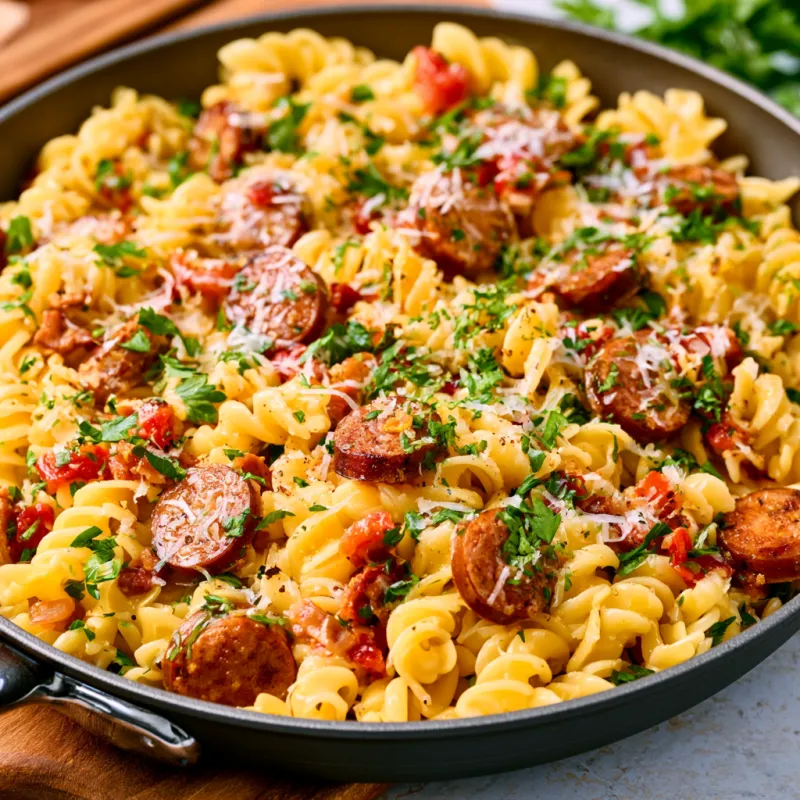
Crowd-Pleasing Summer Sausage Pasta
Ingredients
Equipment
Method
- Bring a large pot of salted water to a rolling boil. Add the pasta and cook until 2 minutes shy of al dente. Reserve 1 cup of pasta water before draining. Drain and set aside.
- While the pasta cooks, heat olive oil in a large skillet or Dutch oven over medium heat. Add the diced onion and cook until translucent, about 4 minutes.
- Add the garlic and summer sausage cubes. Cook, stirring occasionally, until the sausage is browned on all sides and the garlic is fragrant, about 3 minutes.
- Toss in the zucchini and cherry tomatoes. Cook for 2 minutes, allowing the tomatoes to soften and release their juices.
- Pour in the heavy cream and 1/3 cup of the reserved pasta water. Stir to combine, scraping up any browned bits from the bottom of the pan. Bring to a gentle simmer.
- Add the Parmesan cheese and red pepper flakes (if using). Stir until the cheese is melted and the sauce is smooth. Season with salt and pepper.
- Add the drained pasta to the skillet. Toss to coat evenly. If the sauce seems too thick, add more pasta water, 1 tablespoon at a time, until it coats the pasta like a light cream sauce.
- Remove from heat. Stir in the fresh basil. Serve immediately in warm bowls.