
The first time I grilled halloumi, I was skeptical. Cheese on a grill? It sounded like a mess waiting to happen. But halloumi is different. It holds its shape, developing a crisp, golden crust while the inside turns soft and almost creamy. The salty bite, the gentle squeak against your teeth, the way it pairs with a bright honey-lemon glaze — it’s a revelation. And it’s one of the best savory snacks to serve alongside a cup of coffee.

Why Halloumi Works for Grilling
Halloumi is a semi-hard, brined cheese from Cyprus, traditionally made from a mix of goat’s and sheep’s milk. Its high melting point — around 300°F (150°C) versus mozzarella’s 130°F — means it softens but doesn’t collapse on the grill. The salt content is higher than most cheeses, which helps draw out moisture and creates that satisfying crust. When you grill it, the exterior browns in under 3 minutes, while the interior stays tender and slightly springy.
The Key to Juicy, Not Rubbery, Halloumi
The most common mistake is overcooking. Halloumi goes from perfectly soft to tough and rubbery in about 60 seconds. I grill each side for exactly 2 to 3 minutes over medium-high heat (400°F/200°C). You want deep brown grill marks but no charring. The cheese should still have a little give when you press it with tongs. If it feels hard, it’s overdone.
The Honey-Lemon Glaze: A Simple Balancing Act
Halloumi is salty — almost aggressively so. That’s why a sweet-tart glaze is essential. I use a 2:1 ratio of olive oil to honey (2 tablespoons oil to 1 tablespoon honey), plus the juice of half a lemon. The oil helps the glaze cling to the cheese without burning, the honey caramelizes into a light crust, and the lemon cuts through the richness. A pinch of red pepper flakes adds a gentle warmth that plays off the coffee’s acidity. You don’t need much — just enough to coat each piece.
Grilling Technique: Heat, Patience, and a Light Touch
I always preheat my grill pan for at least 5 minutes. A hot surface is non-negotiable. If the pan isn’t hot enough, the cheese will stick and the exterior won’t brown before the interior turns to mush. Once the skewers hit the grates, I leave them alone. No poking, no sliding. After 2 minutes, I peek underneath. If I see deep golden marks, I flip. After flipping, I brush the glaze onto the cooked side — not before, because the raw honey can burn on the direct heat.
Should You Soak the Skewers?
If you’re using wooden skewers, yes — soak them in water for at least 30 minutes. Otherwise, the exposed ends will char and snap. Metal skewers are easier; just oil them lightly before threading.
How to Serve Halloumi Skewers with Coffee
This is where the pairing becomes intentional. The saltiness of the halloumi, the sweetness of the honey, and the acidity of the lemon all mirror and contrast with the notes in a medium-roast coffee. I serve these skewers with a simple pour-over — a washed Ethiopian or a Colombian with bright citrus and floral notes. The cheese’s richness softens the coffee’s acidity, while the glaze highlights its fruity undertones. It’s a savory-sweet balance that works for a late-morning brunch or an afternoon pick-me-up.
If you’re sensitive to caffeine, remember that coffee affects everyone differently. For a lower-caffeine option, try a half-caff blend or a single-origin decaf. And as always, consult a qualified professional for any health-related decisions regarding caffeine intake.
Common Mistakes and How to Avoid Them
- Overcrowding the skewers: Leave a small gap between each cube. If they touch, they steam instead of searing, and you lose that crust.
- Skipping the oil on the grates: Even a well-seasoned grill pan needs a light brush of oil before adding the cheese. Use a high-smoke-point oil like avocado or grapeseed.
- Using too much glaze: A thin coating is enough. Excess glaze will pool and burn, leaving bitter spots. Brush it on after the first flip, not before.
- Waiting too long to serve: Halloumi is best within 5 minutes of coming off the heat. As it cools, the interior firms up and loses that springy texture. Serve immediately.
Takeaway
Juicy grilled halloumi skewers are a quick, satisfying snack that proves cheese and coffee belong together. The technique is simple: hot grill, short cook time, a balanced glaze, and immediate serving. Once you taste that salty, golden exterior against a sip of bright, clean coffee, you’ll wonder why you didn’t try it sooner.
Frequently Asked Questions
Can I use a different cheese instead of halloumi?
Halloumi is unique because of its high melting point — it softens but doesn’t melt. You can substitute with paneer or queso blanco, but the texture will be slightly different and less springy. Avoid regular mozzarella or feta, as they will melt and fall through the grates.
Do I need to marinate halloumi before grilling?
No, halloumi is salty and flavorful on its own. Marinating can actually make it too salty or cause it to release excess moisture. I brush the glaze on after the first flip to keep the exterior caramelized without making the cheese soggy.
Why does my halloumi stick to the grill?
Two common mistakes: the grill isn’t hot enough, or you move the skewers too early. Heat your grill to at least 400°F and let the cheese sear undisturbed for a full 2-3 minutes. It will release naturally when the crust forms. Also, lightly oil the grates before cooking.
What coffee pairs best with grilled halloumi?
A medium-roast black coffee with bright acidity and subtle fruit notes complements the salty, creamy halloumi and the sweet-tart glaze. I personally reach for a washed Ethiopian or a Colombian. Avoid dark roasts with heavy bitterness, as they can clash with the saltiness.
Can I make these skewers in advance?
You can assemble the skewers up to 4 hours ahead and keep them covered in the fridge. Grill just before serving. The glaze can be made a day ahead and stored in the fridge — bring it to room temperature before brushing.
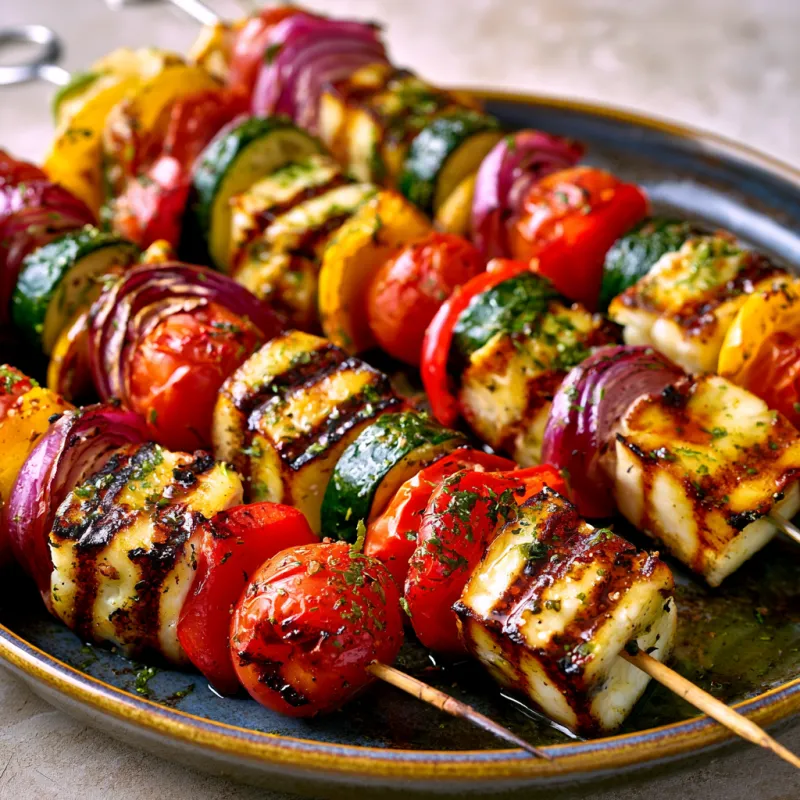
Juicy Grilled Halloumi Skewers
Ingredients
Equipment
Method
- If using wooden skewers, soak them in water for at least 30 minutes to prevent burning.
- Cut each block of halloumi into 1-inch cubes. You should get about 16 cubes per block.
- In a small bowl, whisk together the olive oil, honey, lemon juice, and red pepper flakes (if using) until emulsified.
- Thread 4-5 halloumi cubes onto each skewer, leaving a small gap between pieces for even heat circulation.
- Heat a grill or grill pan over medium-high heat (about 400°F/200°C). Lightly oil the grates.
- Place the skewers on the grill. Cook for 2-3 minutes per side, until deep golden grill marks appear and the cheese softens slightly but holds its shape. Do not move the skewers while grilling; let them sear undisturbed.
- Using tongs, flip each skewer and brush the grilled side with the honey-lemon mixture. Cook for another 2 minutes.
- Remove from heat and brush with any remaining glaze. Garnish with fresh mint or oregano and a pinch of flaky sea salt if desired. Serve immediately while warm and slightly springy.